
Legal Department AI EnablementOur attorneys design which steps of contract review and legal consultation use AI and where people make the judgment.
- Response time
- 1 business day*
- First consultation
- 30 min free
- Scope
- Workflows · Review structures · Rules · Knowledge
* As a rule, for contract reviews and routine legal questions. For complex or urgent matters we propose a schedule that fits the matter.
Client companies served*
150+Selected clients shown, in no particular order. * Clients and partners. Not limited to Legal Department AI Enablement matters.











Deciding where to use AI at each step of legal work
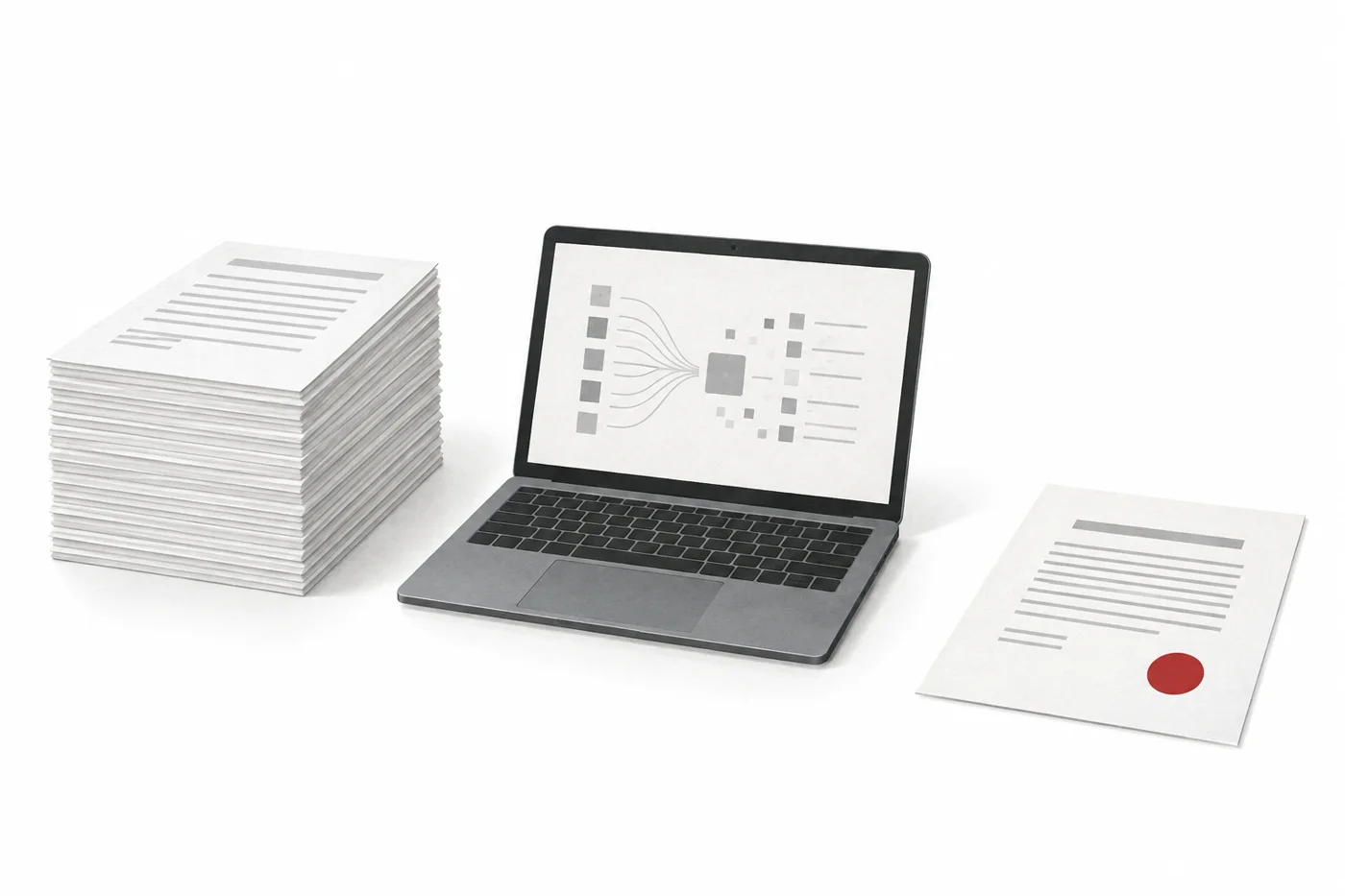
To build generative AI into contract review, legal consultation, research and knowledge management, we hear about your current request routes and review structure and draw the line, task by task, between the steps where AI does the groundwork and the steps where attorneys and legal staff make the judgment. We also make concrete the rules for verifying AI output, the scope of information that may be input and the policy for organizing past materials.
- In AI-assisted reviews, responsibility for oversights is unclear
- How AI tools are used varies from one staff member to another
- You cannot put past contracts and review standards to use with AI
- Management is asking for AI use, and you cannot decide where to start
Why LegalAgent
With LegalAgent, AI use is designed around how legal work is actually done
We move AI use forward in three ways: fast answers, fees you know before we start, and rules and workflow diagrams your staff can refer to as they are.
-
01Speed
Typical law firms
3–5 business daysLegalAgent1 business day, as a rule
You can start before introducing any AI tool
We answer contract reviews and routine legal questions within one business day as a rule. Even before you introduce an AI tool, we hear about your work and request routes and consider the order in which to proceed.
-
02Fees
Hourly billing
Total unknown at the startLegalAgentScope and fee set before we start
We define the work covered, then show the fee
We ask about the work to be covered, the scope of the review structure design and the materials for knowledge management, and give you an estimate before we start. Matter-based work is generally on a fixed fee.
-
03Deliverables
- Workflow diagram
- Rules for verifying AI output
- AI usage rules for the legal department
- Knowledge management policy
We deliver diagrams and rules ready to put into practice
We deliver the workflow diagram, the rules for verifying AI output and the AI usage rules for the legal department as documents your staff can refer to as they are.
* Response times are for contract reviews and routine legal questions; they vary by matter.
How it works
The AI Agent takes stock of the work; attorneys decide the key review points
The AI Agent organizes the work materials you provide and drafts workflow diagrams and rules; attorneys decide where to draw the line between what is left to AI and what people review.
AI Agentdoes the work
- Maps the steps from materials on your work and request routes
- Refers to past design examples and rule templates
- Drafts workflow diagrams and usage rules
Attorneysmake the judgment
- Separate the steps left to AI from the steps people decide
- Decide which clauses and types of questions an attorney must always review
- Take responsibility for the final review structure and rules
- STEP 01Confirming current workflows and AI use
Review the legal department's work step by step, and distinguish work where AI can readily be used from work where human judgment should be maintained for now
Inventory of work and results of selecting areas for AI use
- STEP 02Designing workflows and review structures
Separate the steps where AI does the first-pass organization from the steps where attorneys and legal staff make the final judgment, and design the escalation conditions
Workflow diagram and draft review structure design
- STEP 03Setting usage rules and quality review standards
Set out the scope of information that may be input, the AI services that may be used, and the steps for verifying AI output in contract review
AI usage rules and rules for verifying AI output
- STEP 04Reflecting the results in the knowledge management policy
Consider a policy on which past materials to organize and how, and reflect a policy for organizing them into a form AI can refer to
Knowledge management policy and list of materials to be organized
- Attorneys make the final callAn attorney checks every deliverable and takes responsibility for it.
- Your inputs are not used to train AIOn top of attorneys' statutory duty of confidentiality, we work in an environment where your inputs are not used to train AI.
- An AI Agent built in-houseOur own engineers develop it. Information Security Policy
Use cases
Common requests and what you receive
Based on typical situations in which a legal department needs to consider AI use or revisit how it operates, we summarize what happens if nothing is done, how far LegalAgent organizes the matter, and what you receive.
-
01
The legal department has trialed a contract review support tool but has no criteria for deciding on full rollout
If left aloneUsage varies from team to team and spreads while the accuracy of AI output and the scope of review remain unclear, or conversely usage never takes hold and the investment is not recouped
What we doReview the current contract review workflow, request routes and review structure, and separate the steps where AI is used from the steps where attorneys and legal staff make judgments
What you receive- Workflow diagram
- Results of selecting areas for AI use
- Criteria for full rollout
-
02
AI has been built into contract review, but there is no settled way to manage the risk of oversights
If left aloneContracts are signed without anyone noticing issues the AI missed, or conversely every AI output is rechecked by hand and no efficiency is gained
What we doFor each contract type, separate the scope AI checks from the scope attorneys check, and set out the steps for verifying AI output and the conditions for escalation
What you receive- Rules for verifying AI output
- Review structure flow
- Escalation criteria
-
03
Past contracts and review records are scattered across matter folders and are not in a state AI can use
If left alonePast decision criteria remain only in staff members' memories, cannot be handed over to new staff or outside providers, and the same issues are reconsidered from scratch every time
What we doConfirm where past contracts, review comments and internal decision criteria are kept and in what format, and consider a policy for organizing them into a form usable for AI search and reference
What you receive- Knowledge management policy
- List of materials to be organized
- Draft reference rules
-
04
Senior management has asked for legal work to be made more efficient with generative AI, but you cannot decide where to start
If left aloneOnly the call for efficiency gets ahead, AI use spreads on the ground without information management or review structures, and later the actual usage can no longer be tracked
What we doTake stock of the legal department's work, and identify the work suited to AI, the scope of information that may be input, and the areas to tackle first
What you receive- Inventory of work
- AI use roadmap
- Explanatory materials for senior management
-
05
You are considering having AI give first-line answers to legal questions from business units, but have not decided how to address the risk of wrong answers
If left aloneWrong answers reach business units as they are, leading to mistaken contract signings or decisions, or the attorney's review becomes a mere formality
What we doSeparate the types of questions AI may answer first from the types that an attorney must always review, and set out the review steps before answering and how to keep records
What you receive- Consultation handling flow
- Criteria for whether a first-line answer is permitted
- Draft review record template
Scope of our legal department AI enablement support
For each area of work, we set out at which steps of contract review, legal consultation and research AI is used and at which steps attorneys and legal staff make judgments.
- Selecting areas for AI use and designing workflows
- We take stock of the legal department's work and separate, within contract review, legal consultation and research, the steps that use AI from the steps where attorneys and legal staff make judgments.
- Taking stock of legal work and selecting areas for AI use
- Designing workflows and review structures
- Applying AI to contract review and quality review
- To manage the risk of oversights when applying generative AI to contract review, we make concrete the steps for verifying AI output and the conditions for escalation.
- Developing rules for verifying AI output in contract review
- Setting escalation criteria and recording methods
- Developing AI usage rules for the legal department
- Taking into account confidential information, personal information and customer information, we set out the scope of information the legal department may use and the AI services it may use.
- Developing AI usage rules for the legal department
- Organizing legal knowledge and connecting it to AI use
- We consider a policy for organizing past contracts, review comments and internal decision criteria into a form that can be searched and referred to with AI.
- Knowledge management policy for past contracts and review standards
- Connecting with existing playbooks
Our approach
What we focus on in Legal Department AI Enablement
In supporting generative AI use in legal departments, we design workflows around the following points.
- 01
Breaking work down into steps before considering AI use
Rather than treating contract review or legal consultation as a single task, we break it down into steps such as intake, first-pass organization, risk identification, drafting proposed revisions and internal explanation, and then consider which steps should use AI.
- 02
Attorneys designing review structures with an understanding of the substance of legal work
Based not only on the functions of AI tools but also on what judgments are actually made in contract review and legal consultation, we design where, by whom and how AI output is reviewed.
- 03
Balancing management of confidential and personal information with usability on the ground
If use is restricted excessively in favor of information management, unmanaged tools may be used on the ground. We specify concretely the scope of information that may be input and make rules that staff can easily follow.
- 04
Prioritizing knowledge management rather than doing it all at once
Rather than trying to organize all past materials at once, we start with frequently used contract types and areas where decision criteria vary most.
Pricing
Legal department AI enablement fees
Fees for supporting generative AI use in legal departments vary with the scope of work covered, the amount of consideration needed to design the review structure and the scope of knowledge management, so we provide an estimate after hearing the details of your consultation.
How fees are set
Scope and fee agreed before we startMatter-based work is generally on a fixed fee. For complex or urgent matters, we propose a schedule and an estimate that fit the matter.
First consultation
A free 30-minute online meeting.You can come to us before your documents are in order. Tell us what you know so far.
Free consultationWhat we check before quoting
- The scope of legal work covered (contract review, legal consultation, research, etc.)
- The scope of consideration needed to design workflows and review structures
- The number of departments and sites covered by the AI usage rules
- The volume of materials covered by knowledge management and how they are to be organized
- Whether ongoing operational support is needed
We provide an individual estimate after confirming the work covered, the scope of the review structure design and what is covered by knowledge management.
Team & Record
Attorneys who know contract work and legal tech handle your matters
- Contract reviews and drafts
- 2,000+
- Client companies
- 150+
- Startup legal matters
- 200+
- Legal and investment DD
- 20+
* Approximate figures based on matters handled by our firm; actual figures vary by matter.
 Founders · M&A · FundraisingNoriaki AsatoRepresentative Attorney / Founder & CEO / Dai-ichi Tokyo Bar Association
 Startup legal · Contract operations DX · Business development experienceTakashi SugaiAttorney / Corporate Legal Practice / Daini Tokyo Bar Association
 Intellectual property · Patent disputes · Japan Patent Office secondmentKosuke HirukawaAttorney / Intellectual Property Practice / Tokyo Bar Association
Engineers
Shinya Makita and Sota Miya build our product on the same team as the attorneys.
Practical guides to generative AI use in legal departments
- What to Decide Before Bringing AI Agents into Legal Work
- In the AI Era, Contract Review Standards Are Best Organized as a Legal Playbook
- Designing Log Audits and the Allocation of Responsibility for AI Agents
- Minimum Rules for Using Generative AI in the Workplace: A Beginner's Guide
- ChatGPT, Claude and Gemini: An Introduction to Choosing AI for Legal Work
FAQ
Frequently asked questions
Can we consult you before we have introduced any generative AI tools?
Yes. After hearing about your current legal work and request routes, we consider which work is suited to AI use and in what order to proceed.
Do we have to assume a particular AI service or vendor to consult you?
There is no need to assume a particular service. We first organize your workflows and review structure, and then consider what kinds of AI services could be built into your operations.
Can we also get legal advice on using AI in contract review at the same time?
Legal issues concerning the terms of use, copyright or personal information relating to AI services themselves are handled on the AI Legal Consulting page. This page focuses on workflow design, that is, how to build AI into the legal department's work, but if related legal issues arise, please consult us about them as well.
Can we also ask you to create the playbook itself?
Creating contract-type-specific decision guides themselves is handled by Legal Playbook Development. On this page, we consider how to position and connect playbooks within the design of AI-enabled workflows.
Can we consult you even if our past contracts and review records are not organized?
If you have information on how your work is currently done and how materials are stored, we can begin the review. We treat the unorganized state itself as something to examine.
What is the difference between one-off consultation and ongoing support?
In a one-off engagement, we organize a specific theme once, such as designing a workflow or developing rules. With ongoing support, we also handle reviews after operations begin and the gradual expansion of knowledge management.
Can we consult you if we have no dedicated legal staff or only a small team?
Yes. Even if you have no dedicated legal staff or run with a small team, we hear how your work is currently done and consider AI use within a manageable scope.
Contact
Talk to us about AI use in your legal department
Please share whatever information you can, such as how your legal work is currently done, the AI tools you use or are considering, and the state of the materials you want to organize.
- A free 30-minute online first meeting
- You can consult us even without dedicated legal staff
- You can consult us without assuming a particular AI service